🏏Tata IPL 2025 Ticketing System
Designing a high-scale, high-pressure ticketing experience for India’s biggest sporting event
Scope
Queue System, Ticket Discovery, Booking, Ticket Transfer, Offers, Membership Passes
Scale
Millions of users, peak-demand traffic
Platform
App (iOS & Android) and Web
Overview
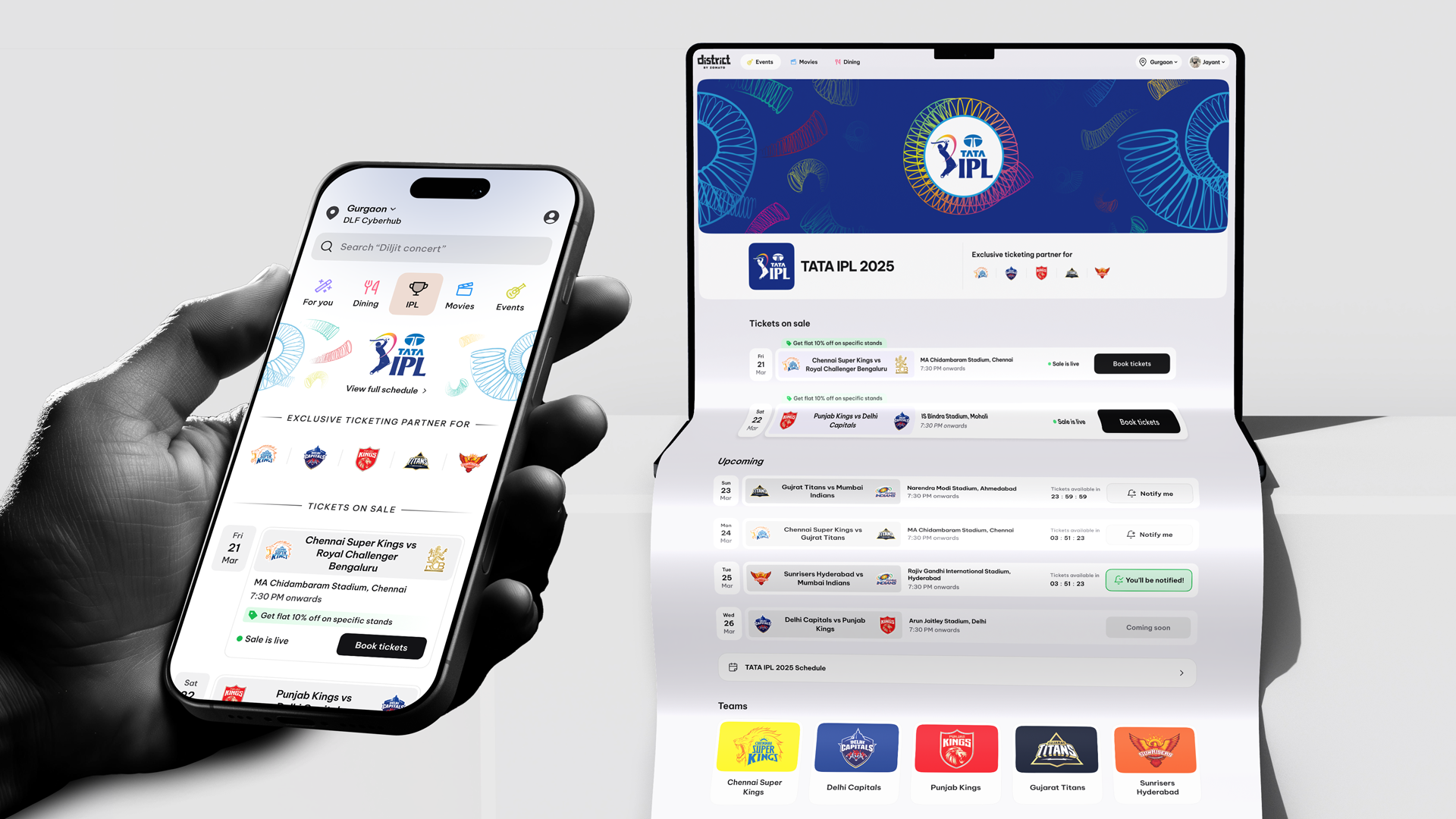
Tata IPL 2025 was one of the most complex and high-traffic ticketing initiatives of the year. District served as the official ticketing platform for five IPL teams — Chennai Super Kings, Delhi Capitals, Sunrisers Hyderabad, Punjab Kings, and Gujarat Titans.
The project required designing a unified ticketing ecosystem across mobile app and web that could handle massive concurrent demand while maintaining fairness, clarity, and reliability.
This initiative covered the full journey — match discovery, queueing, booking, ticket sharing, offline access, and on-ground entry — making it one of the most critical product initiatives of 2025.
The Challenge
IPL ticket sales involve extreme traffic spikes, limited inventory, emotionally invested users, and very little tolerance for failure. Fans expect instant access, transparent fairness, and zero confusion — especially during high-demand moments when tickets sell out in minutes. The system also needed to support group bookings, split venue entry, offers, memberships, and unreliable network conditions at stadiums.
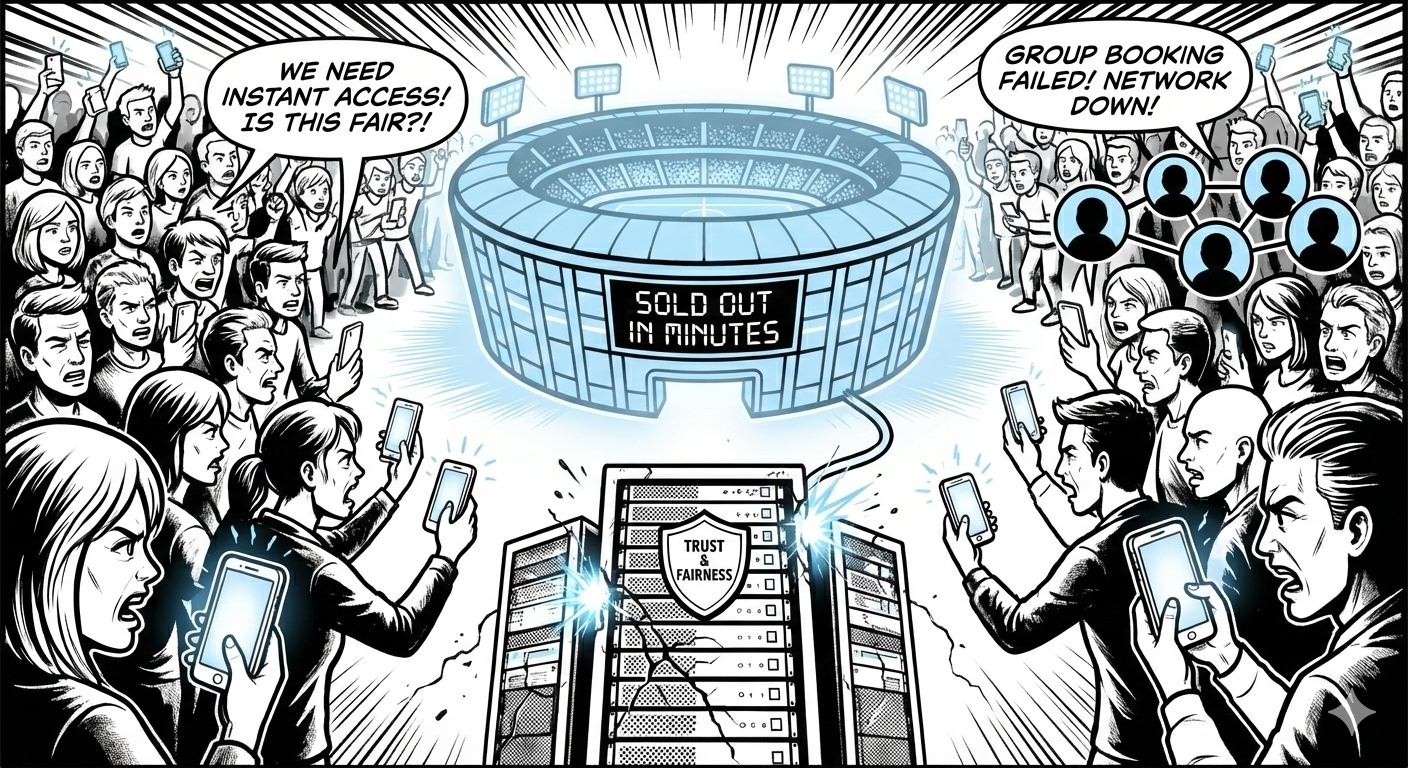
The challenge was not just scale, but trust — ensuring users felt the system was fair, predictable, and dependable under pressure.
Product Goals
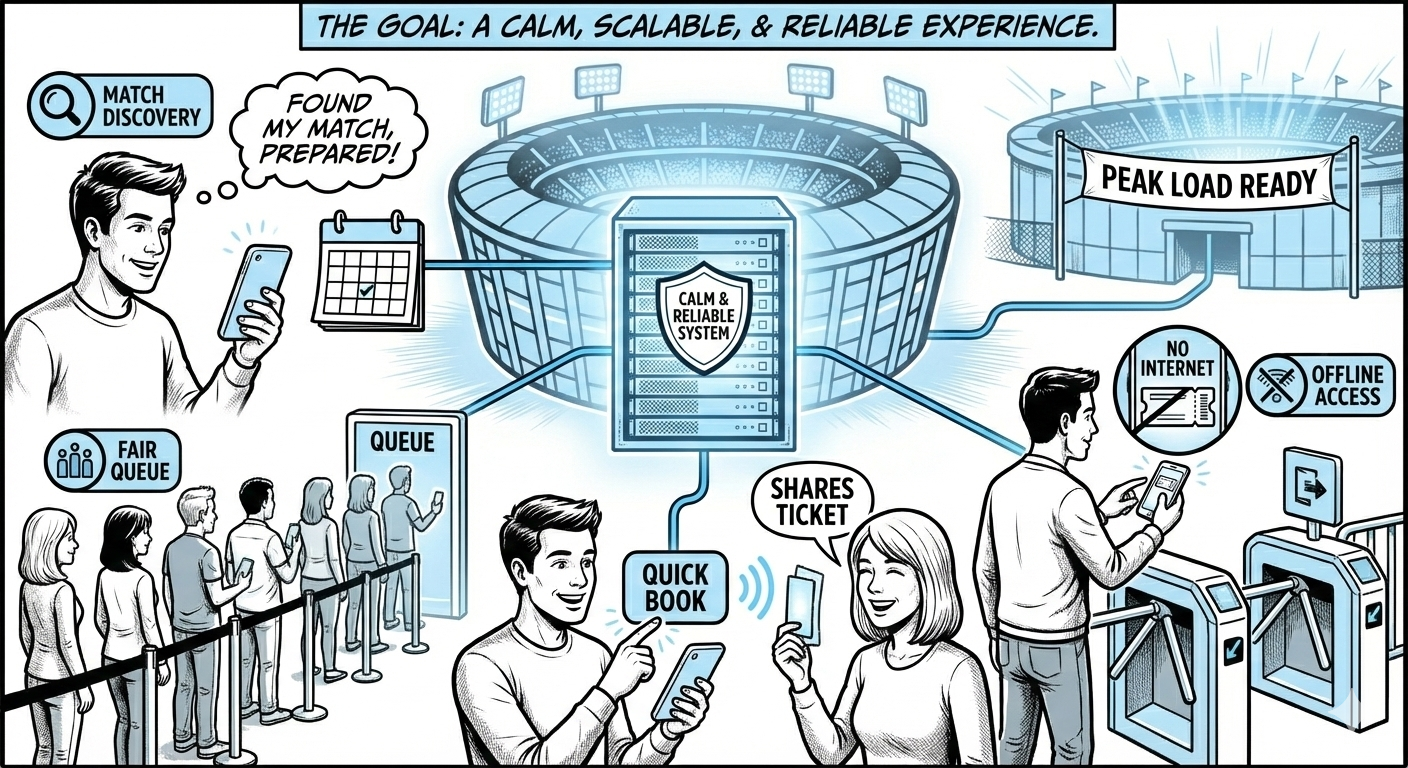
The primary goal was to build a calm, scalable ticketing experience that could perform reliably at peak load. The system needed to help users discover matches easily, prepare in advance, enter fair queues, book tickets quickly, share tickets securely, and access tickets even without internet connectivity at the venue.
Match Discovery & IPL Landing Page
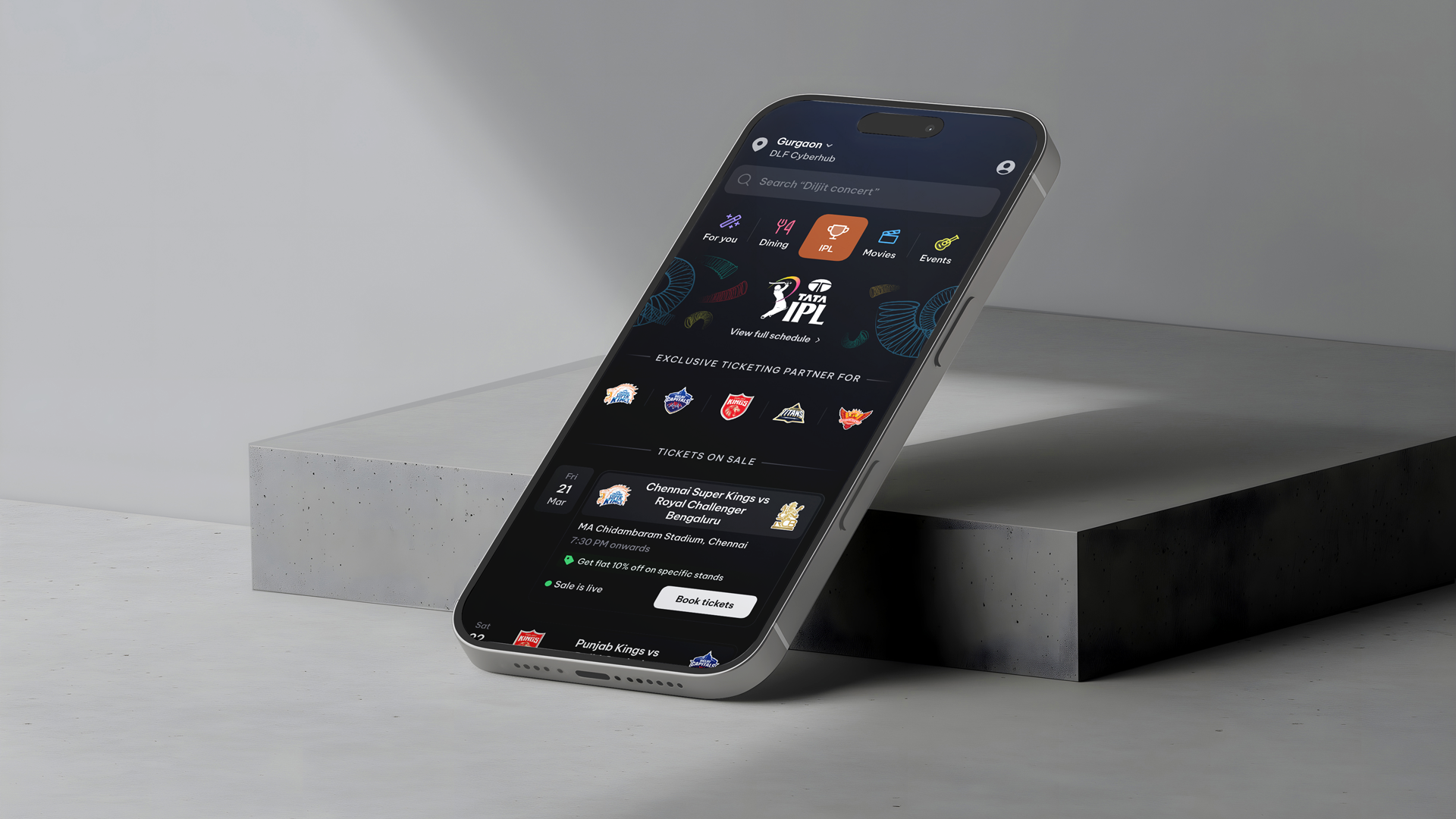
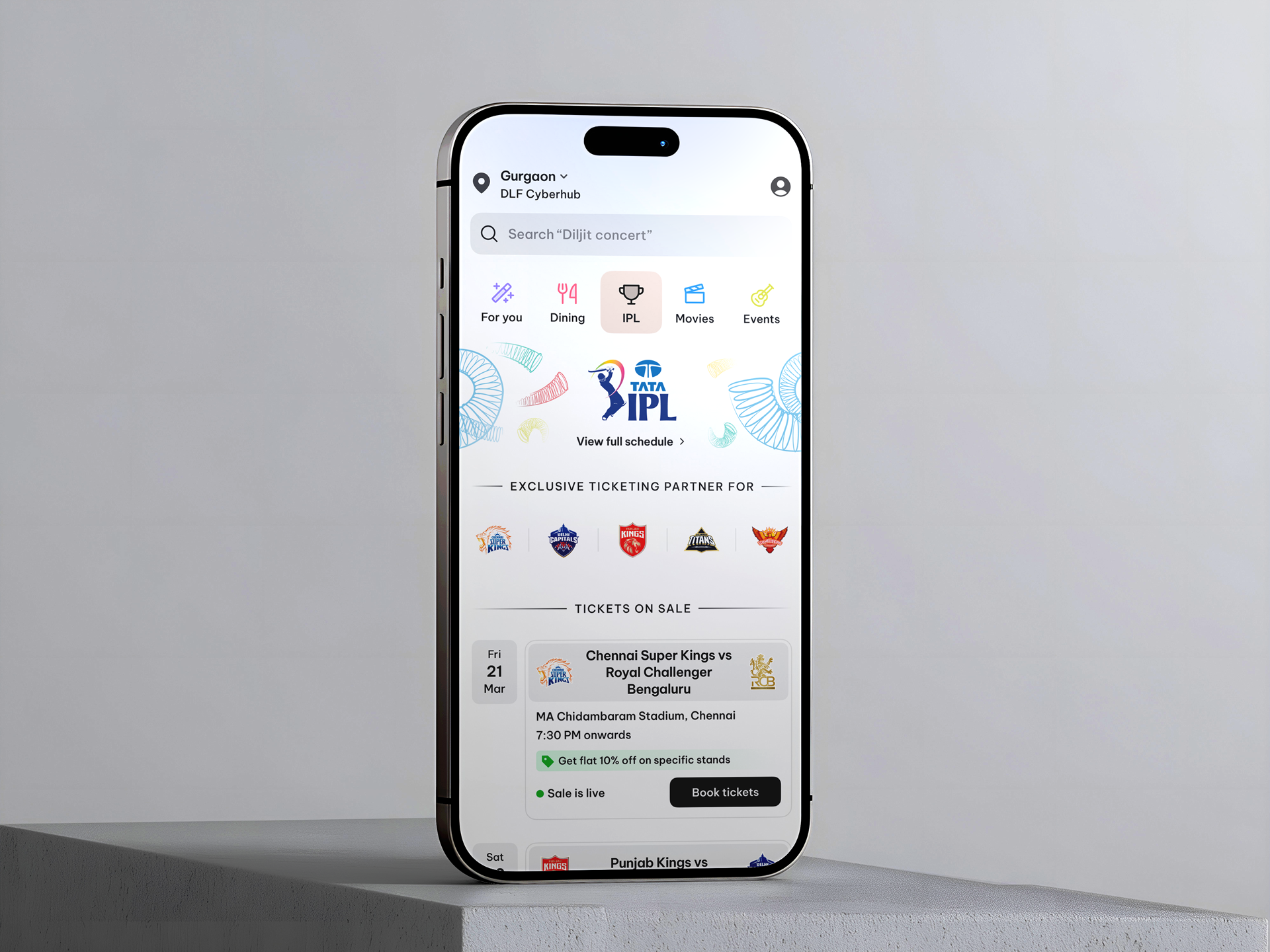
A dedicated IPL 2025 landing page was designed across the District app and web to act as the central entry point for all matches. Users could explore fixtures by team, city, and date, view venue details, and quickly switch between teams. This reduced discovery friction and helped users orient themselves before ticket sales opened.
Hotlisting Matches
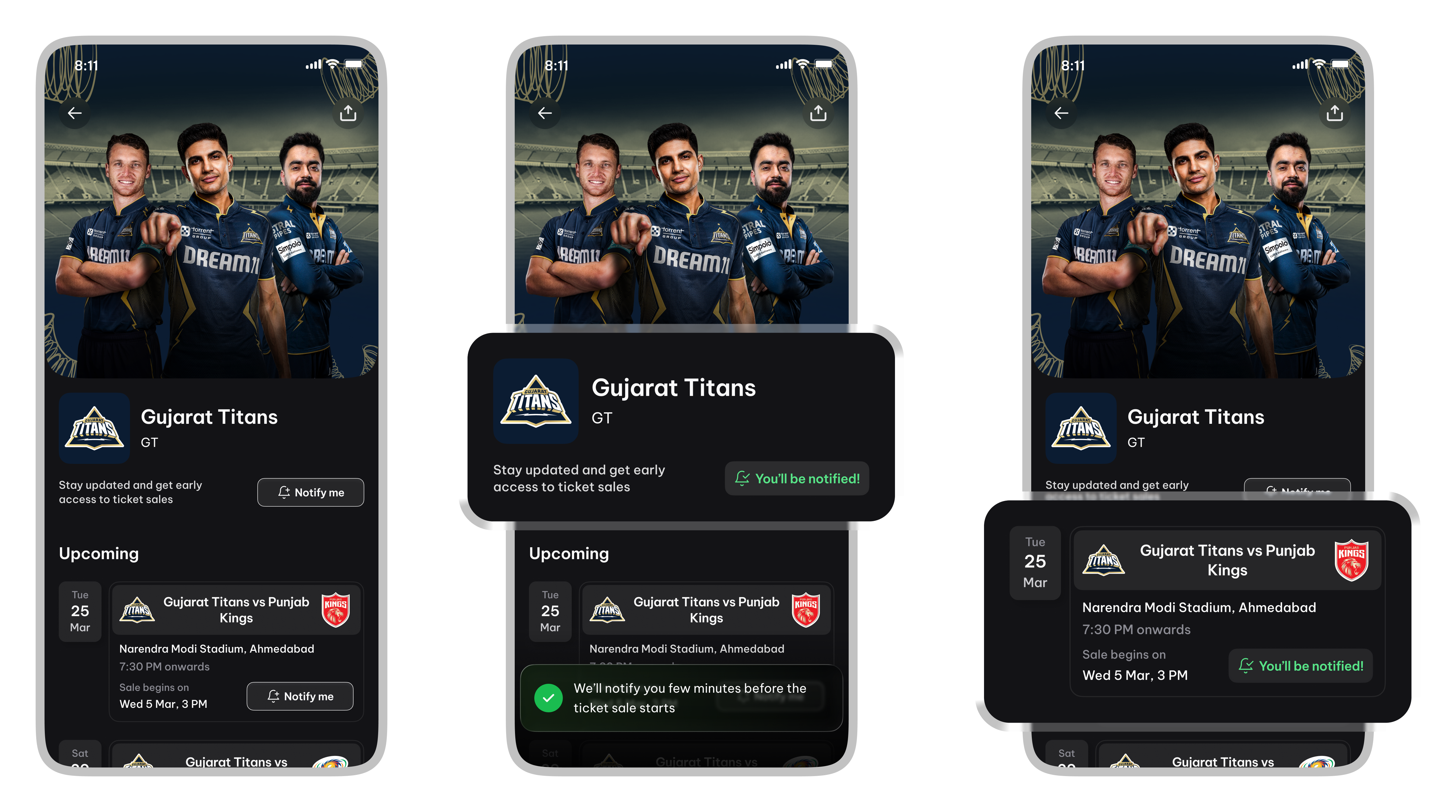
To handle uncertainty around sale timings and availability, we introduced Hotlisting:
This reduced missed opportunities and improved preparedness during peak moments.
Virtual Queue Experience
A transparent virtual queue system was introduced to manage massive concurrent demand during ticket sales. The queue clearly communicated position, estimated wait time, and real-time system updates. Fairness messaging and predictable UI behavior helped reduce anxiety and drop-offs, even when wait times were long.
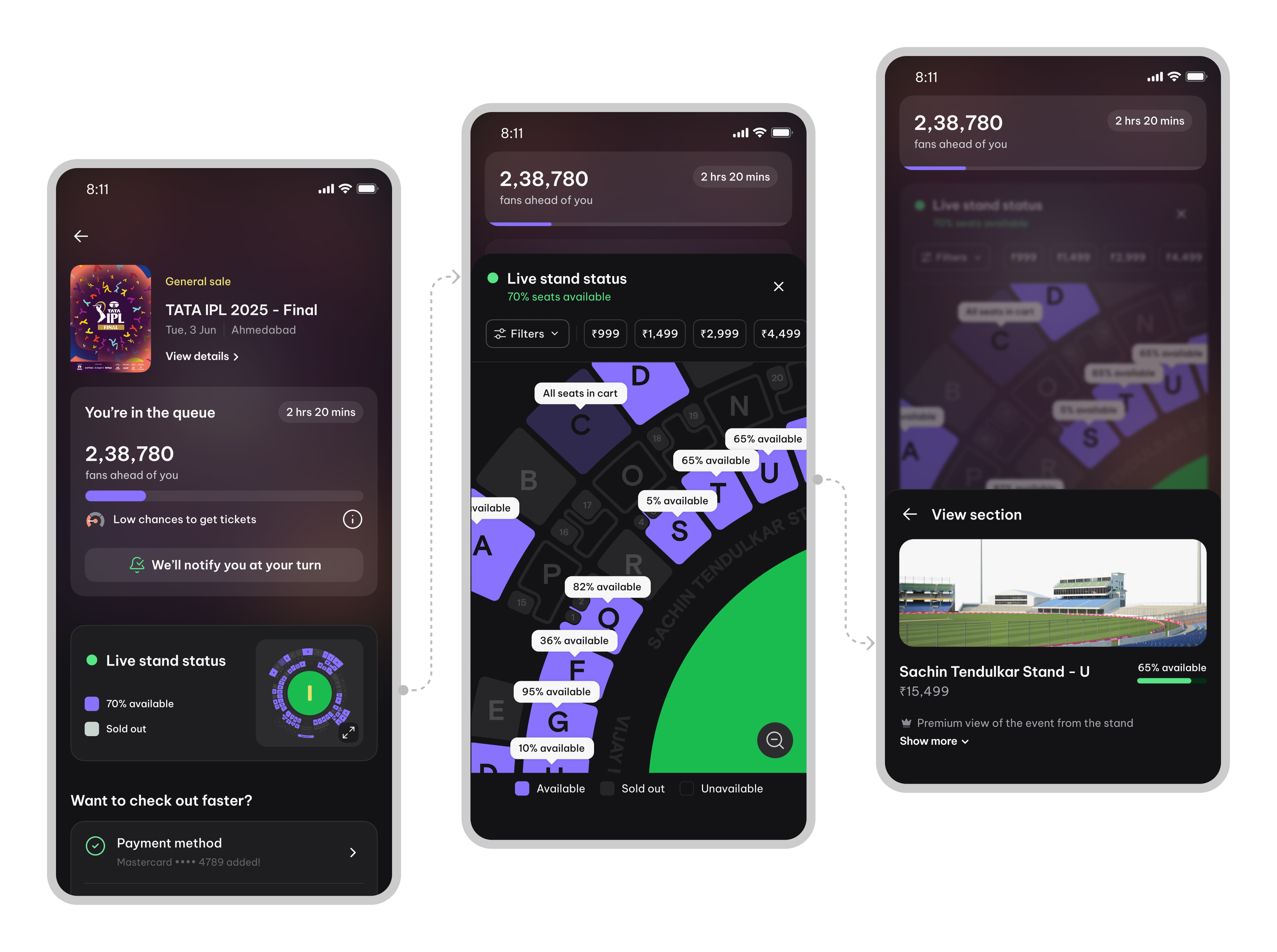
The queue was designed to explain itself clearly, ensuring users trusted the process rather than feeling blocked or uncertain.
Ticket Booking Flow
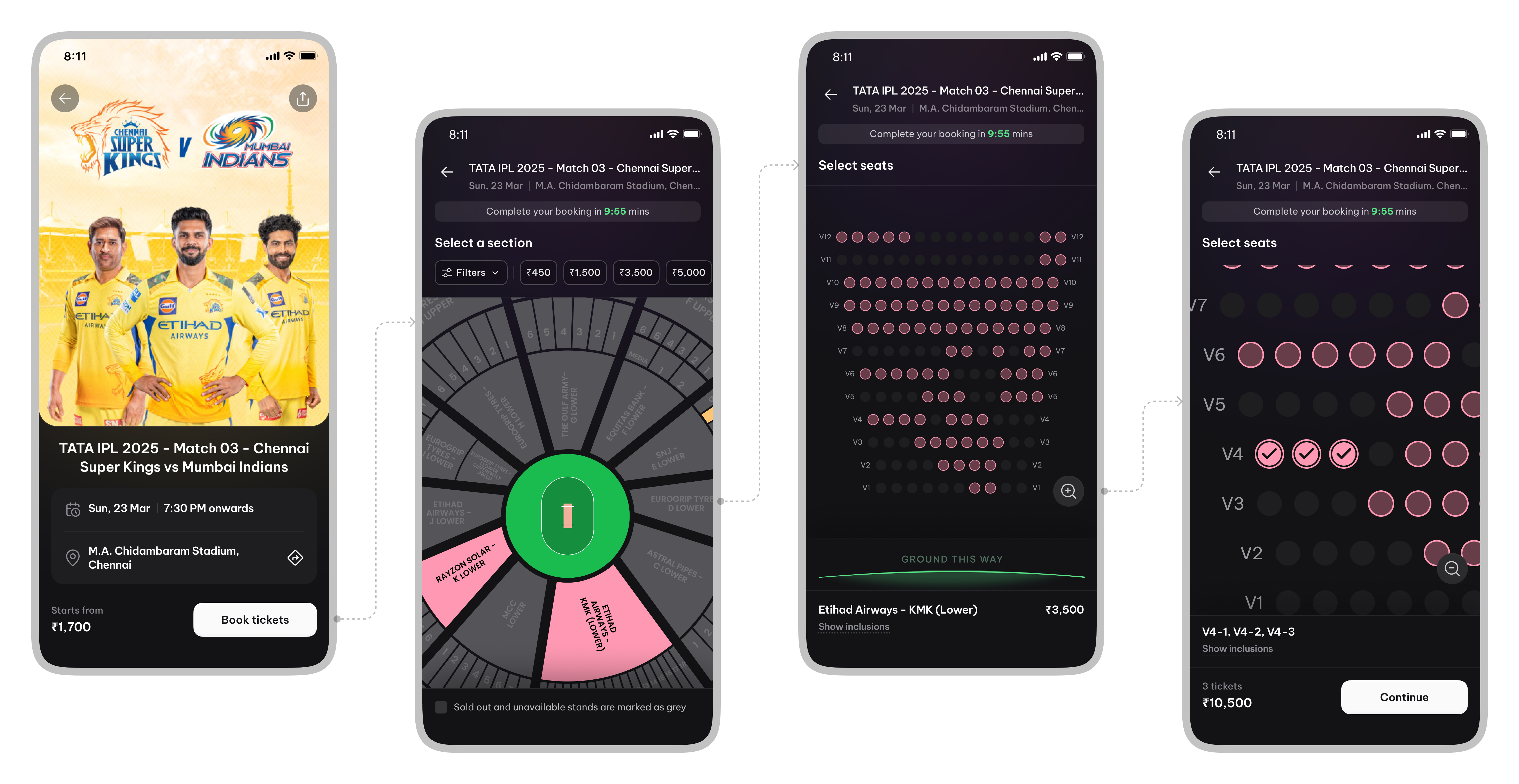
Once users entered the booking flow, the experience was optimized for speed and clarity. Seat categories, pricing, and availability were clearly presented, and checkout flows were streamlined to handle high-volume traffic efficiently.
The focus was on minimizing cognitive load and interaction time, as delays could directly result in lost inventory.
Multiple Ticket Types by Venue
IPL venues follow different entry and security protocols, so the ticketing system was designed to support multiple ticket types based on venue requirements.
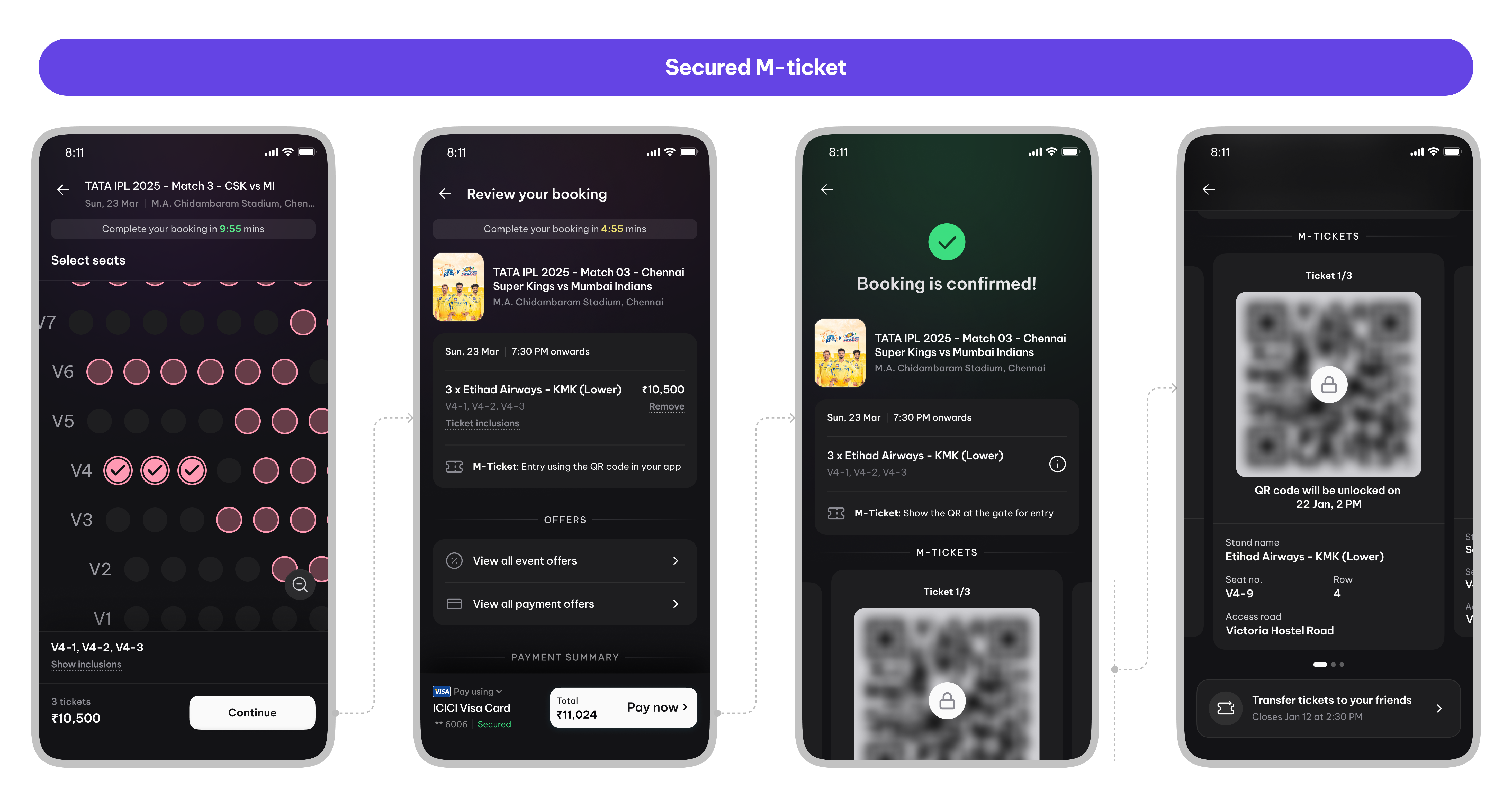
For digital-first venues
We introduced secured M-tickets, where the QR code remains hidden until match day to prevent misuse, screenshots, or unauthorized sharing. This ensured higher security while still keeping the experience fully digital.
For venues requiring physical tickets validation
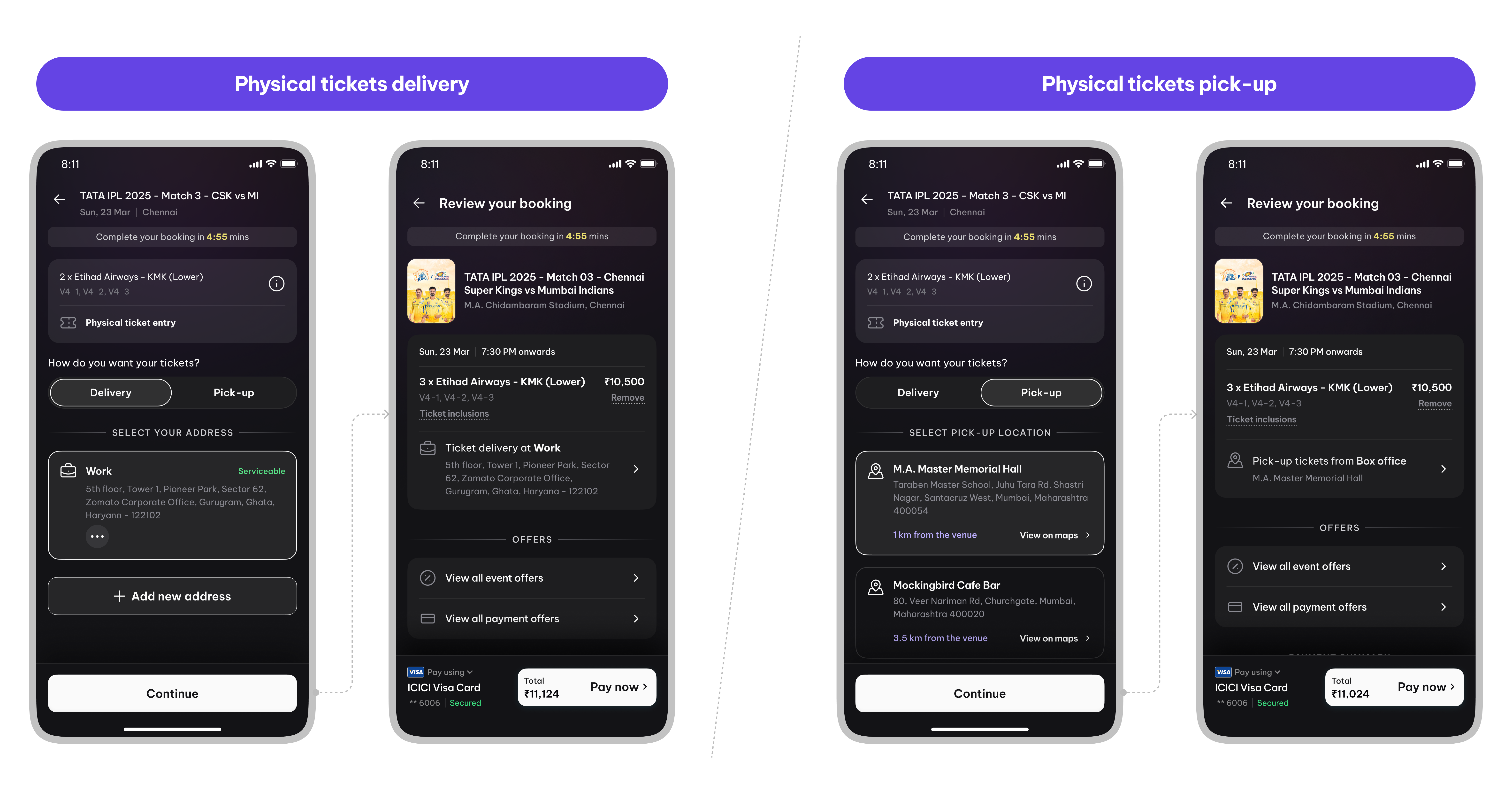
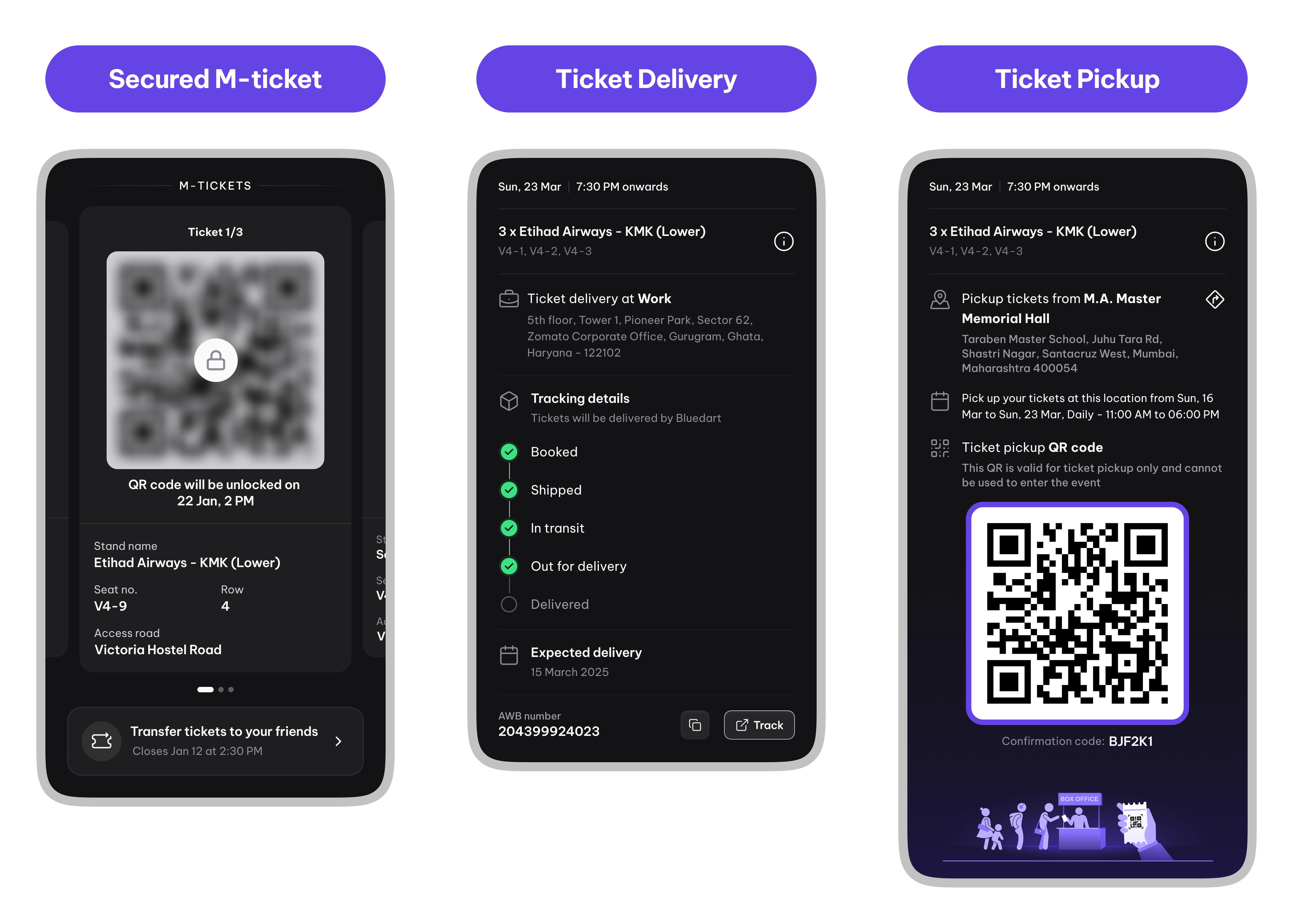
The system supported physical ticket entry, offering users flexible fulfillment options. Customers could either choose home delivery of physical tickets or collect tickets from the box office before match day. Clear ticket-type indicators and instructions were shown throughout the journey to set correct expectations and avoid last-minute confusion.
This flexible ticket-type system allowed District to adapt seamlessly to venue-specific rules while maintaining a consistent booking experience across teams and cities.
Ticket Sharing & App-to-App Transfer
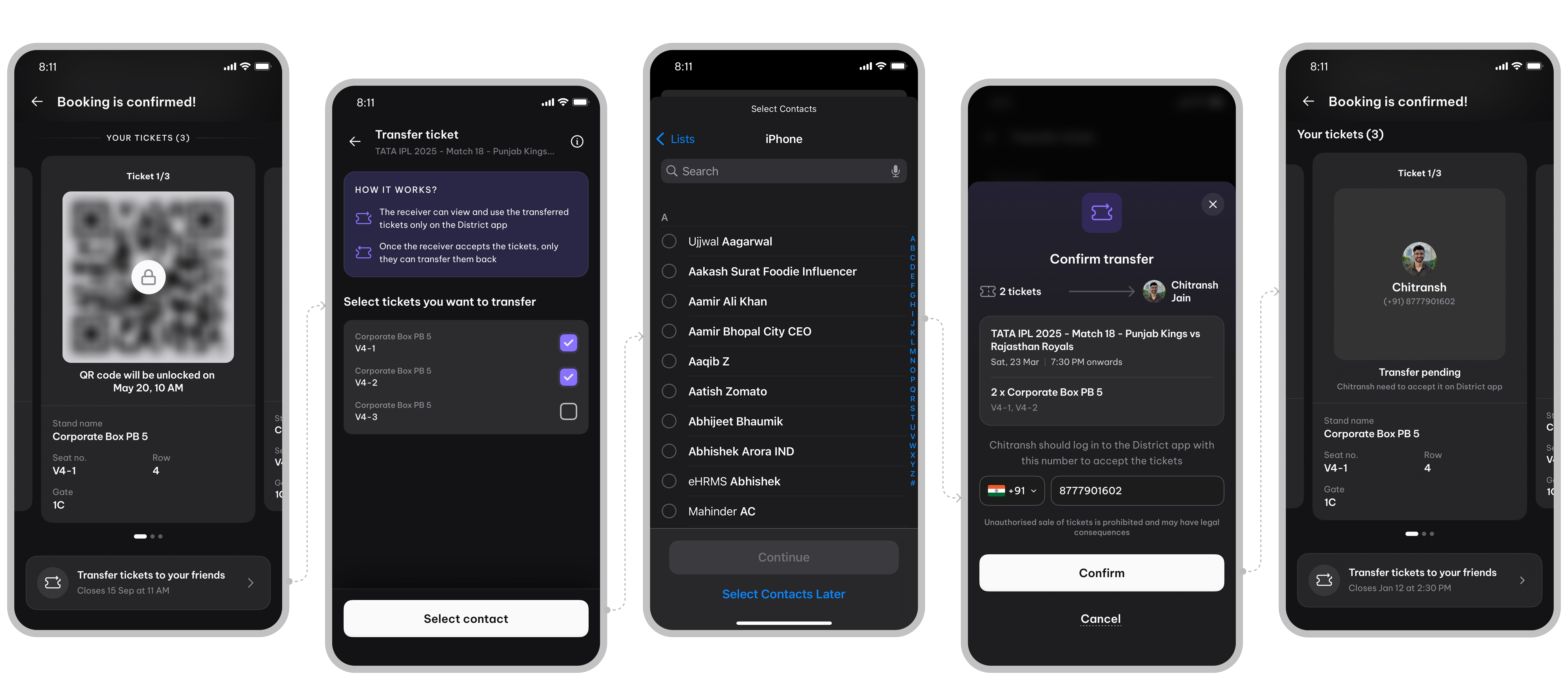
To support group bookings and split entry, a secure app-to-app ticket transfer flow was designed. Users could transfer tickets directly between District accounts without relying on screenshots or external links.
Transfers remained reversible until accepted, and once accepted, ownership transferred clearly to the receiver, who could also return tickets if plans changed. This ensured flexibility while maintaining strong ownership rules.
Offline Ticket Access
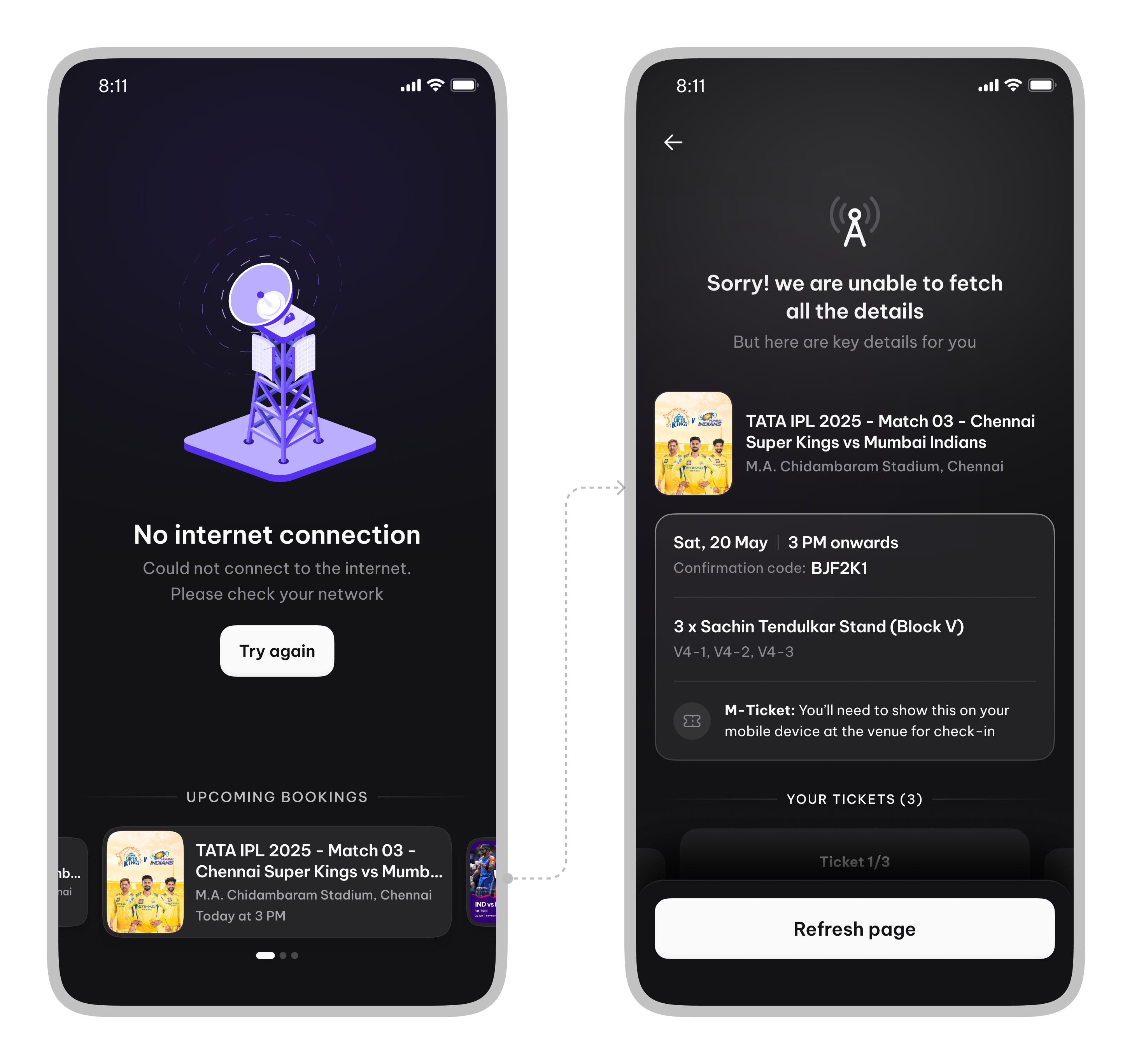
Recognizing that network connectivity is often unreliable at stadiums, an offline mode was designed to ensure users could access their tickets without an internet connection.
Once tickets were booked and synced, they remained available within the app in offline mode, including tickets issued offline. This significantly reduced entry friction and increased user confidence during on-ground access.
Design Approach
The system was designed with a strong focus on fairness, predictability, and transparency. Instead of optimizing purely for speed, the experience prioritized clear system communication, graceful failure handling, and calm UX during high-stress moments. Modular design ensured scalability across teams, venues, and future seasons.
Key Takeaways
Designing for IPL reinforced that in high-demand systems, clarity and trust matter as much as performance. Users are willing to wait if the system feels fair and predictable. Offline reliability and ownership clarity are critical in real-world event environments, and modular design is essential when supporting multiple teams and large-scale events within a single platform.
Final Reflection
The Tata IPL 2025 ticketing system was not just about selling tickets — it was about managing emotion, urgency, and scale at one of India’s most intense sporting moments. By focusing on transparency, flexibility, and reliability, the experience helped position District as a trusted platform capable of handling the country’s most demanding live events.
 Let's talk about your project!