Case study
Cashless Event Experience on District
Recharge bands/cards in-app, skip on-ground queues, and auto-refund the leftover balance
My role
Senior Product Designer
For
Large-scale events and attendees using cashless payments
Teams
Product, Engineering, Ops, Support
Platform
District app + RFID/NFC event infrastructure
Overview
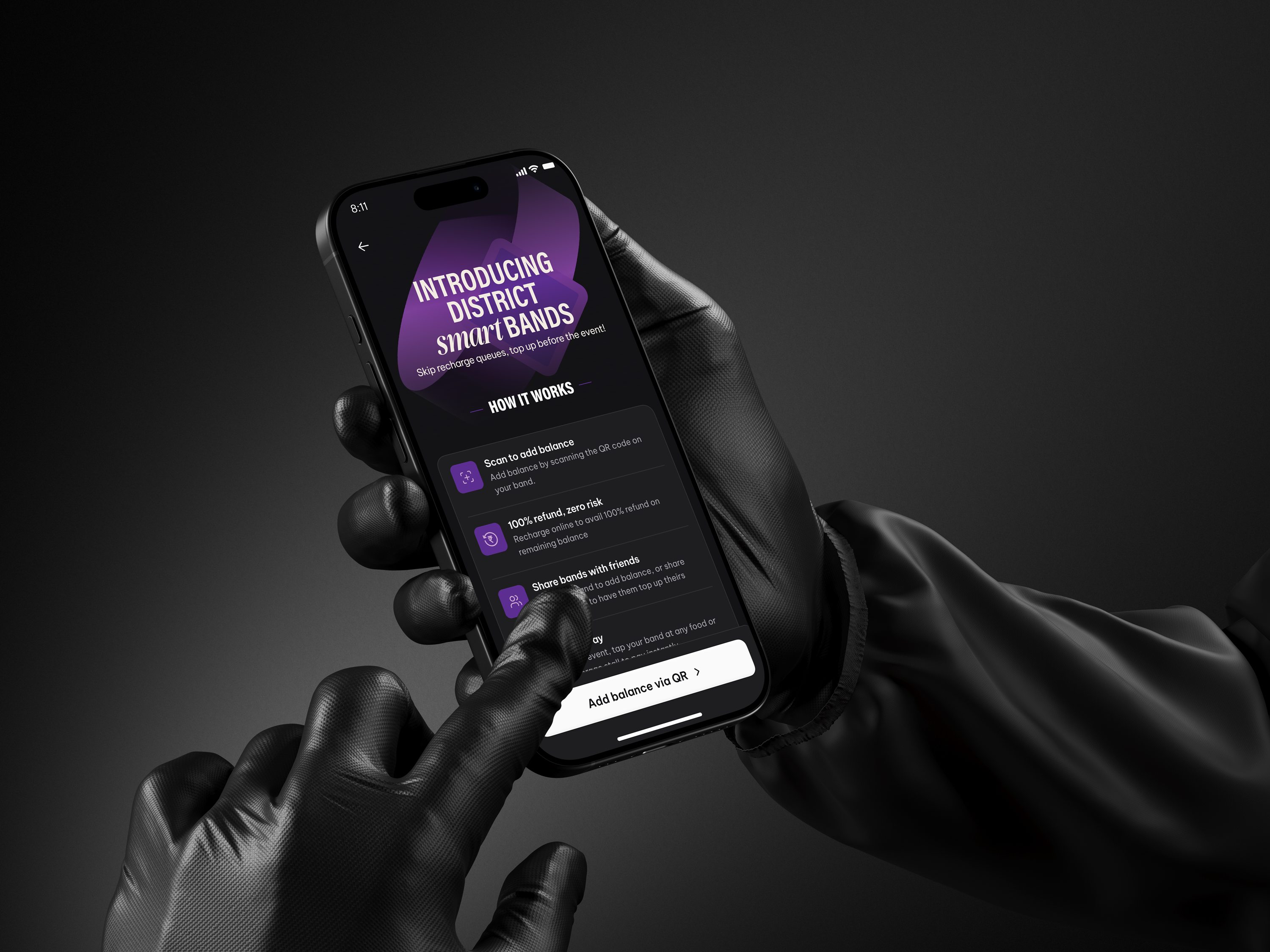
At large-scale events, payments often become the biggest friction point—long recharge queues, dependency on cash or cards, poor connectivity, and unclear refund processes. To solve this, we designed a cashless event experience on District that allows users to recharge event bands or cards digitally, make fast on-ground payments, and receive unused balances back automatically after the event.
The goal was to remove payment anxiety from the event journey and let users focus entirely on the experience.
Problem
Traditional event payment setups introduce multiple pain points:
Long queues at on-ground recharge counters
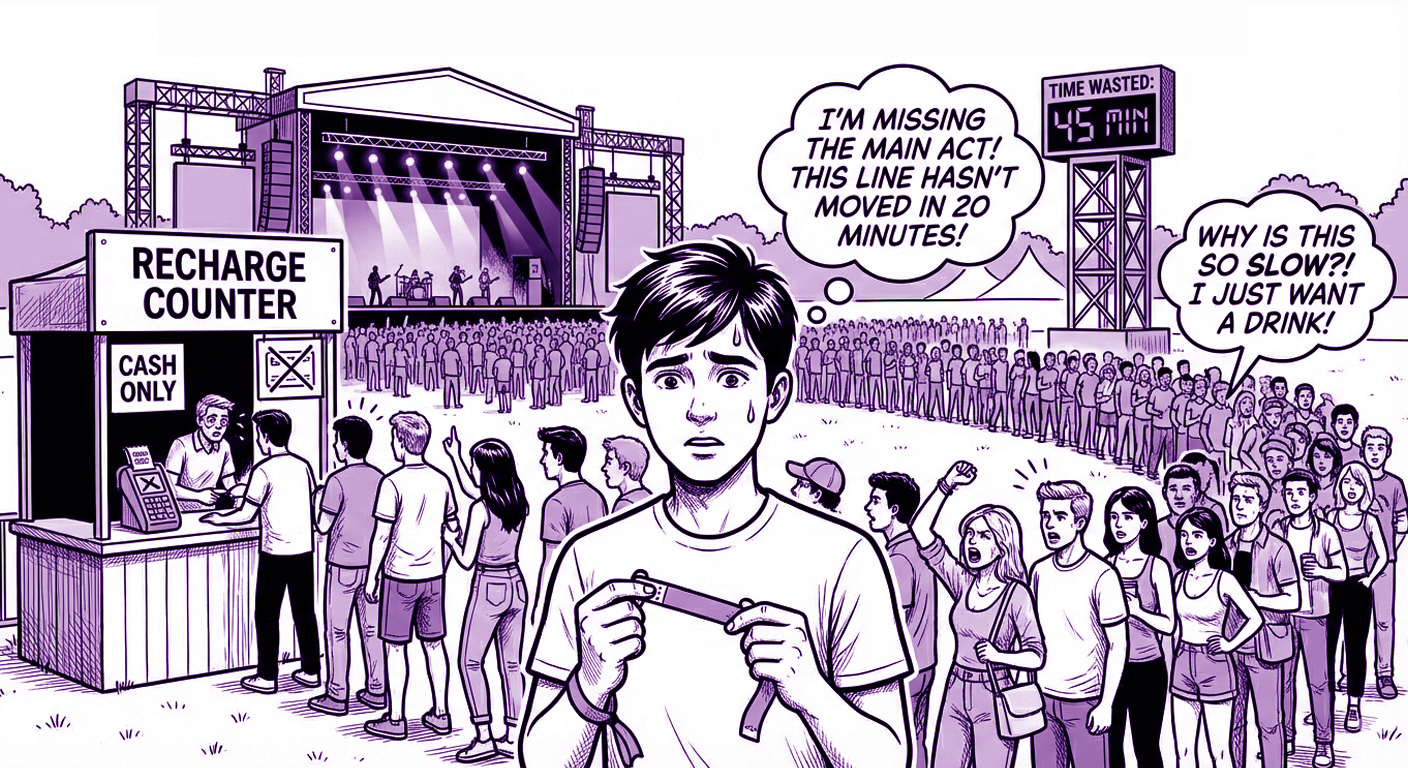
Dependence on cash or physical cards
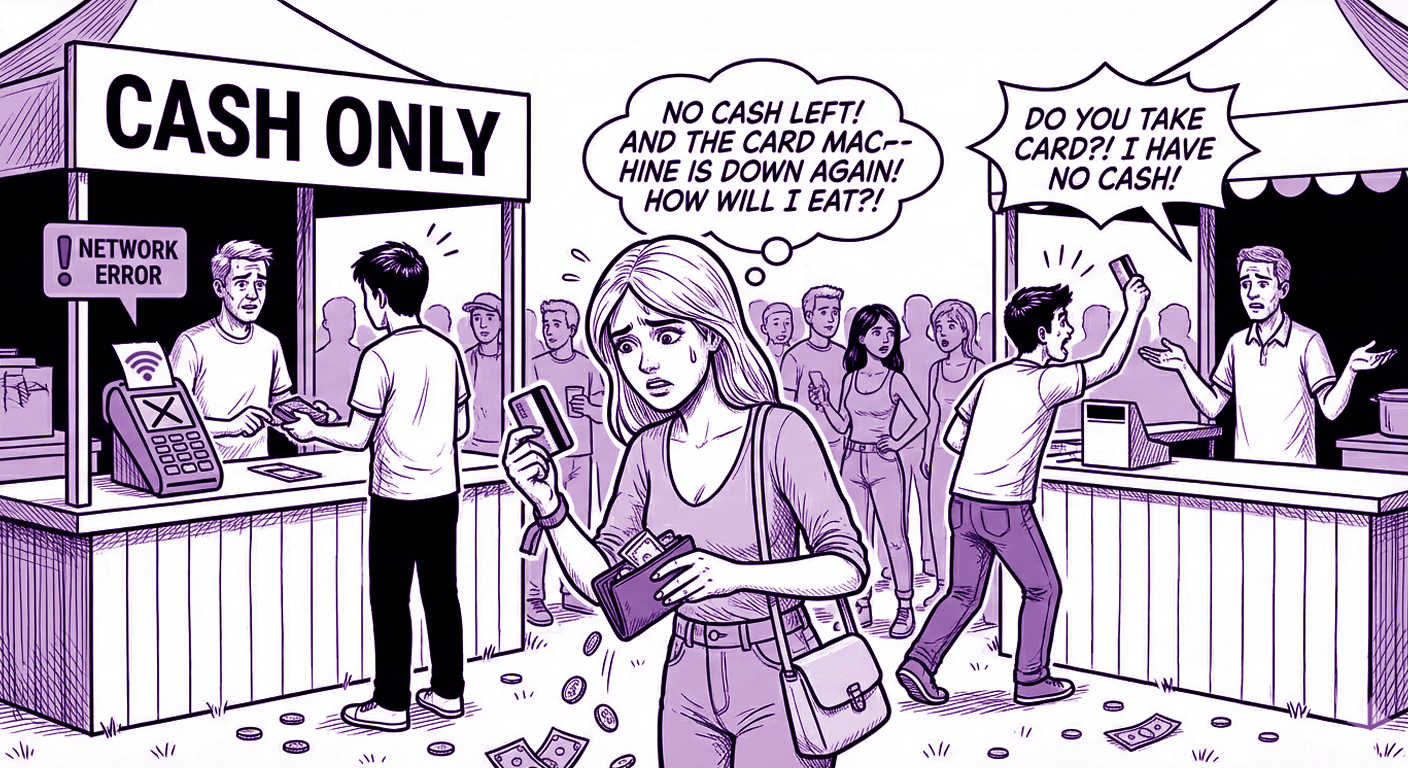
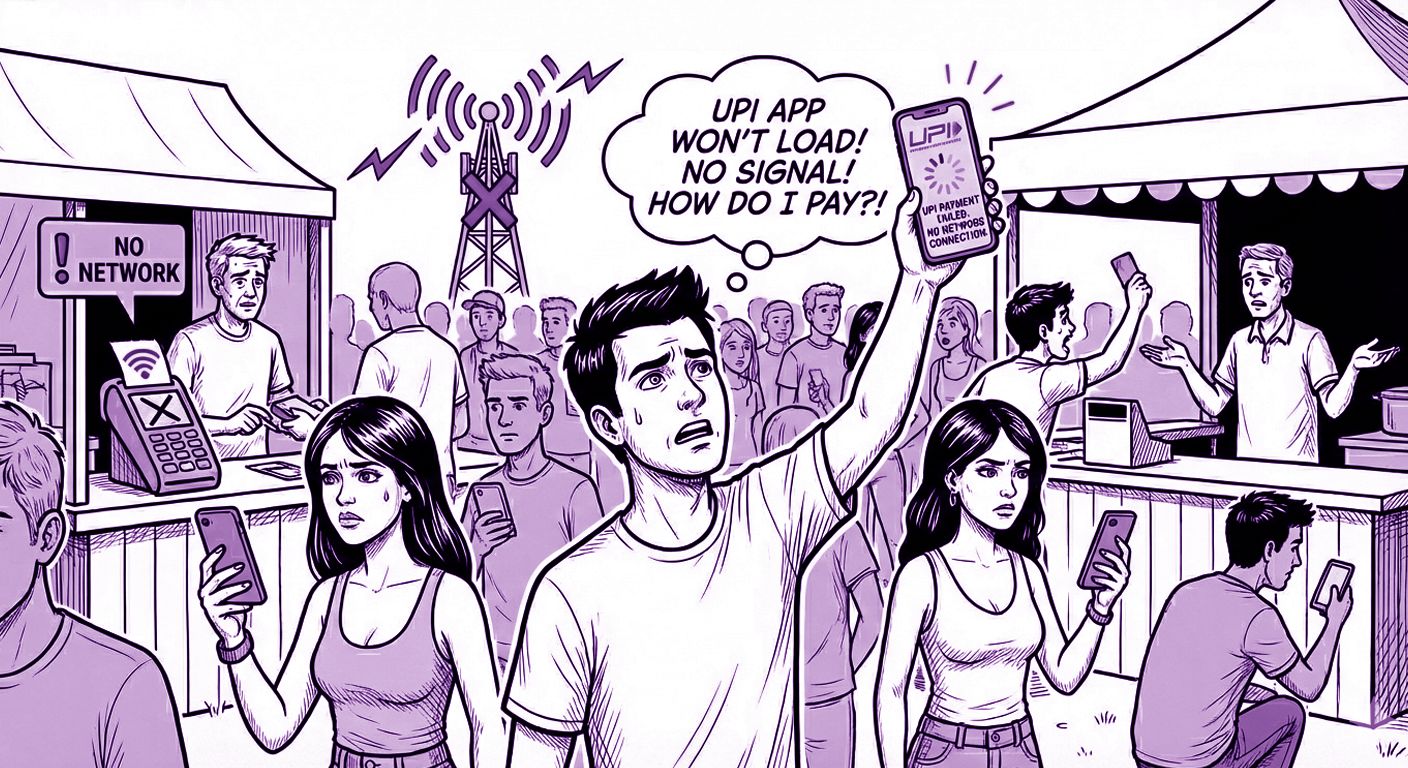
Poor network conditions inside venues
Unclear or delayed refund processes after the event
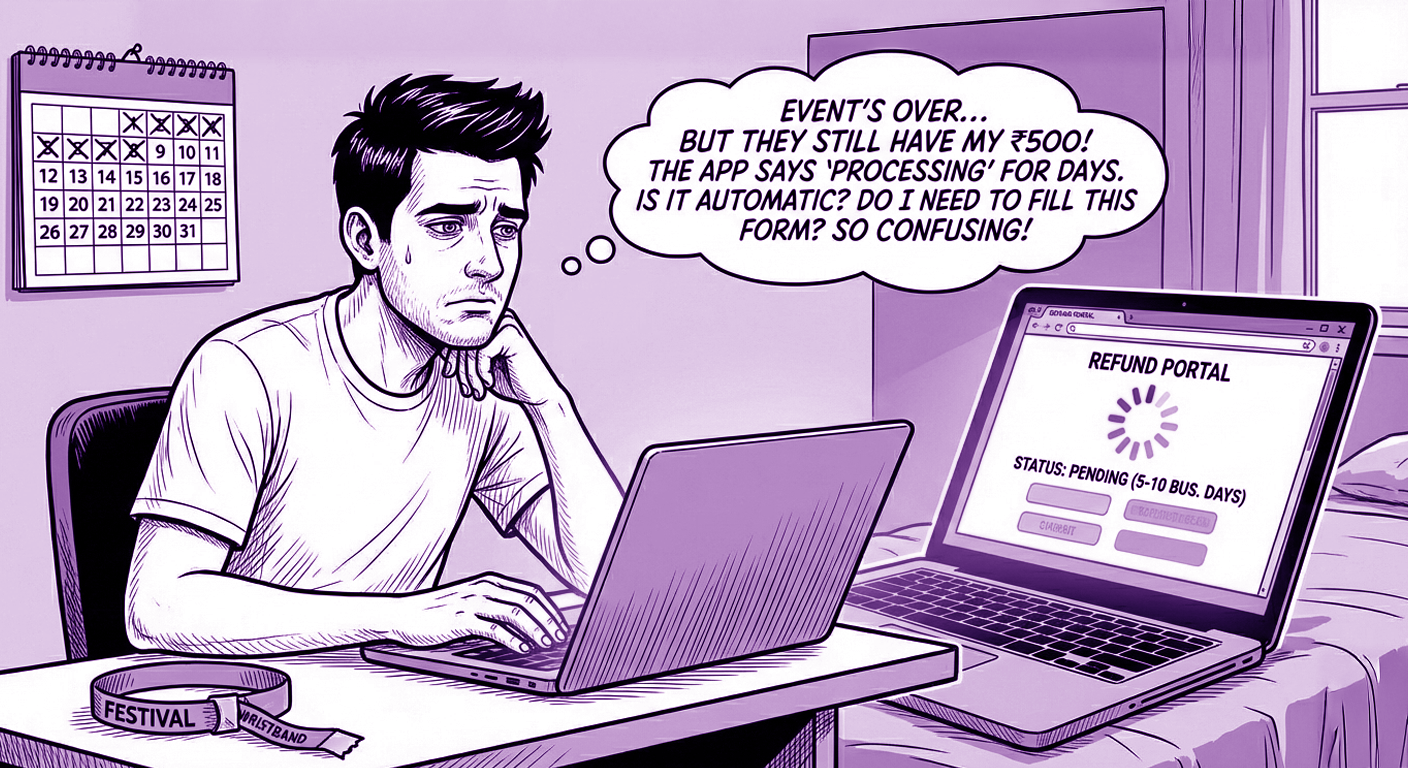
While RFID/NFC bands are commonly used to speed up transactions, the overall experience often breaks when top-ups and refunds are handled manually or inconsistently.
The challenge wasn’t just enabling cashless payments—it was designing a complete, trustworthy loop from recharge to refund.
Goals
We wanted to build a cashless system that feels effortless for attendees and operationally clean for organizers.
• Eliminate on-ground recharge queues
• Enable seamless digital recharges before and during the event
• Ensure fast, reliable on-ground payments
• Provide clear balance visibility and post-event refunds
• Reduce operational load and customer support dependency
The Solution
We designed an end-to-end cashless system powered by the District app, where users can:
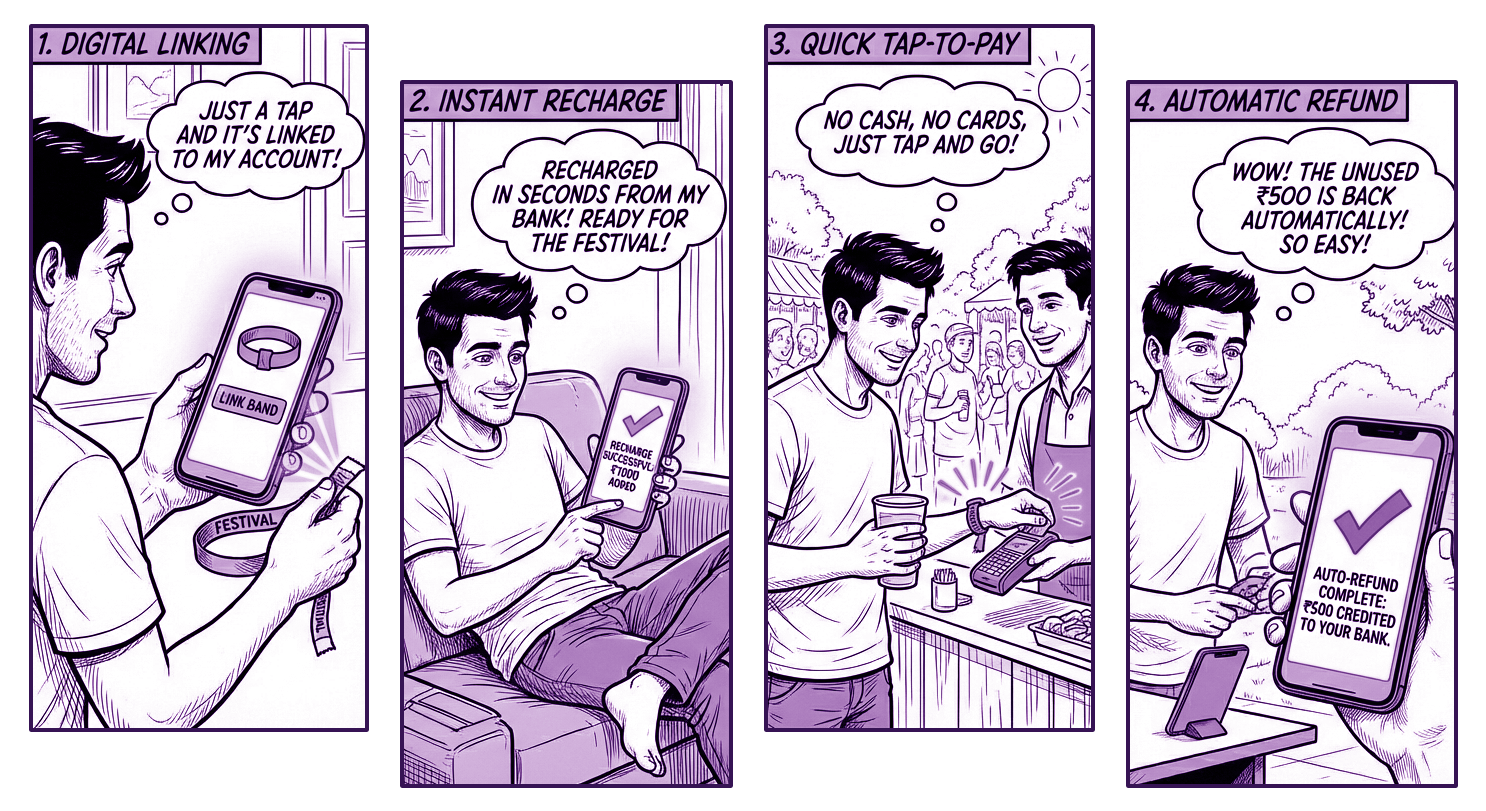
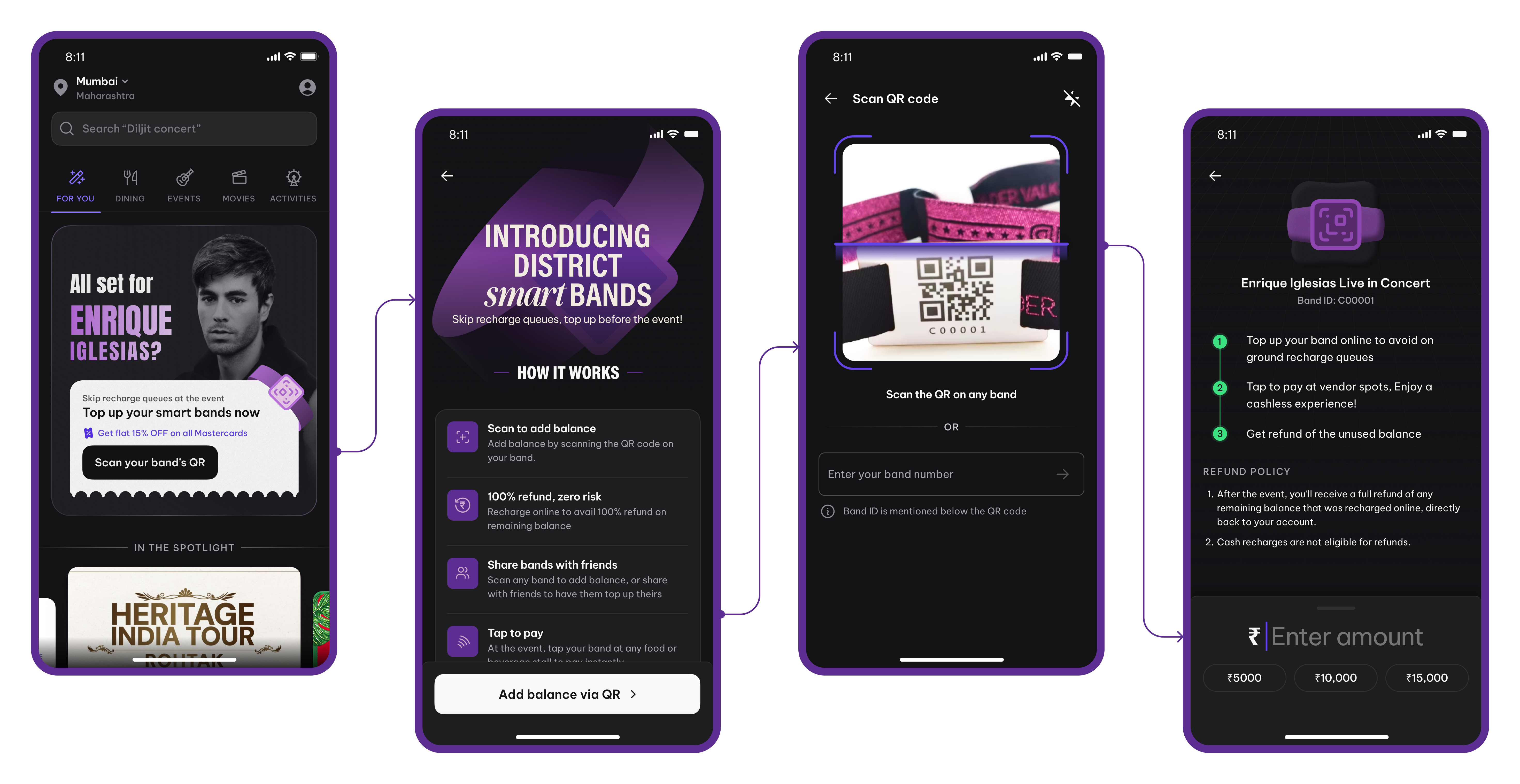
Entry Point & Onboarding
The cashless journey starts directly from the event context within District. Users are prompted to “Go Cashless” and link their band or card using a simple identifier such as a QR code or card number.
Once linked, the cashless wallet becomes visible inside the app, along with current balance and recharge options. This early onboarding sets expectations clearly and builds confidence before users reach the venue.
In-App Recharge (Queue-Free by Design)
Instead of forcing users to stand in physical queues, we enabled instant in-app recharges using existing payment methods. Users can top up:
• Before arriving at the venue
• During the event without leaving their spot
This dramatically reduces congestion at recharge counters and distributes load away from peak on-ground moments.

On-Ground Payment Experience
At vendor counters, users pay using a simple tap with their band or card. The system is designed to be resilient in high-density environments where connectivity can be unreliable.
Whenever connectivity is available, the app reflects real-time spend and remaining balance, reinforcing trust and transparency.
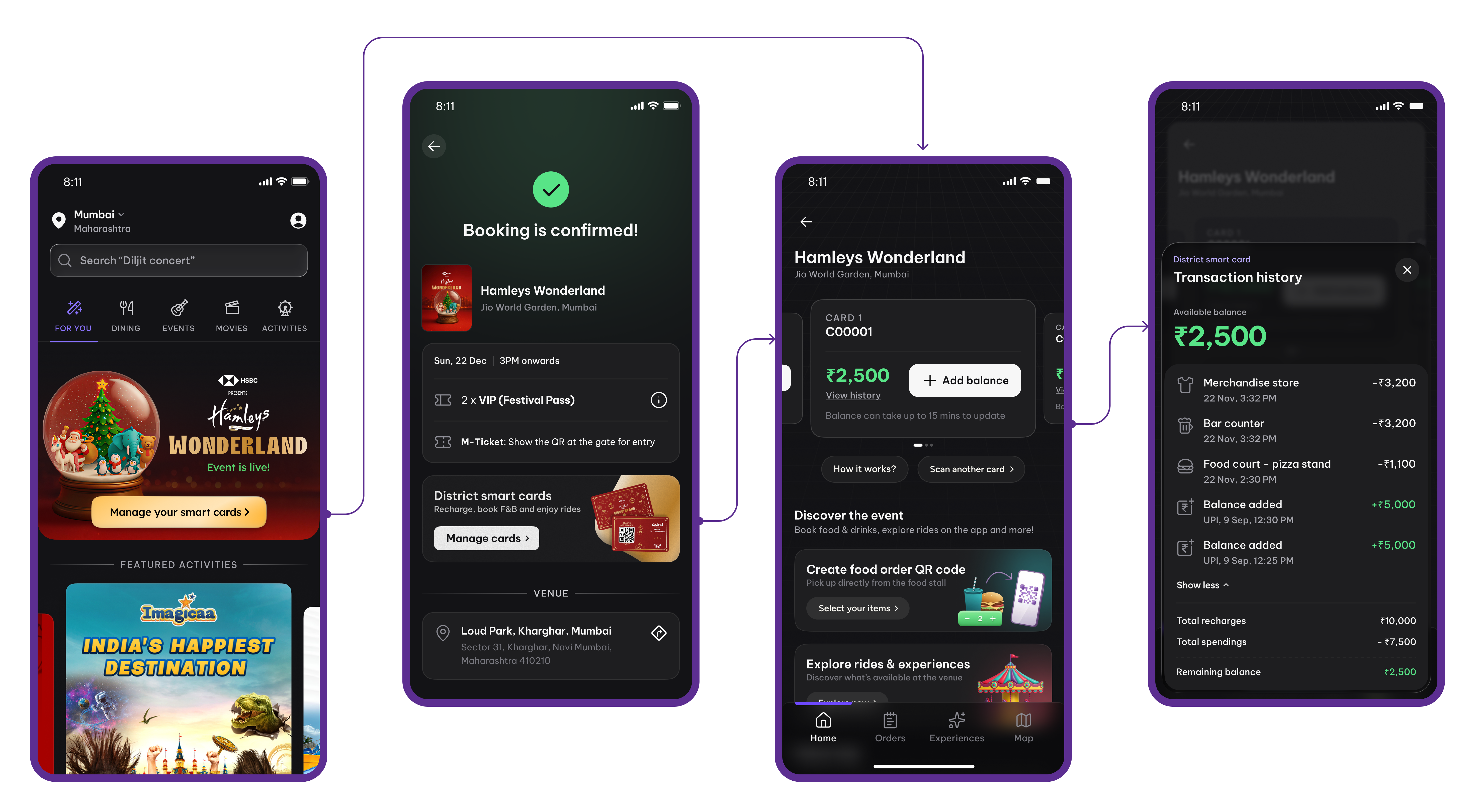
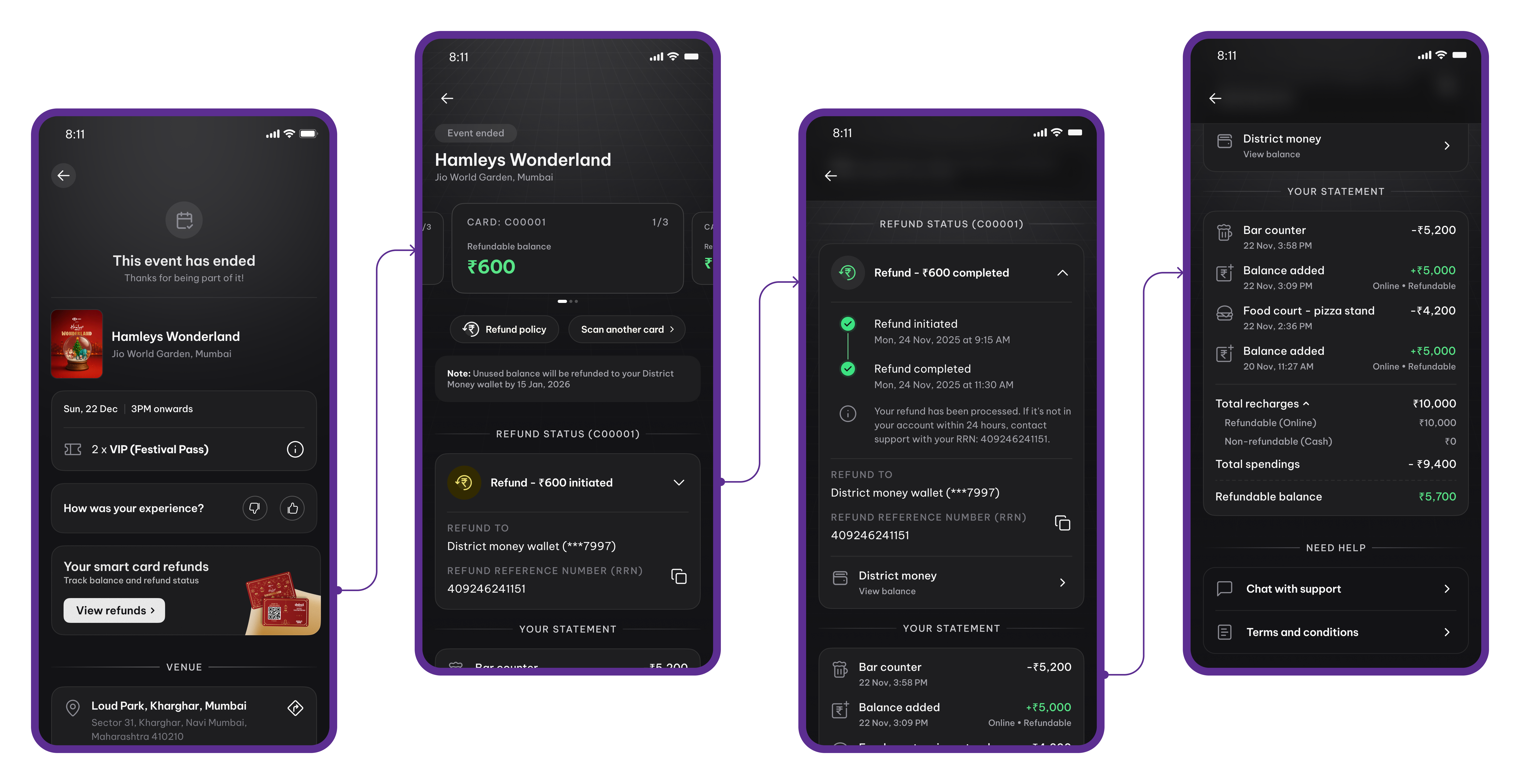
Refunds & post-event closure
After the event ends, users can view their remaining balance and initiate refunds directly from the District app. The experience clearly communicates:
• Refund eligibility
• Refund amount
• Expected timelines
Unused balances are refunded back to the original payment source, closing the loop cleanly and avoiding the frustration commonly associated with event wallets.
Competitor Landscape (India)
Most cashless event solutions in India are fragmented: Ticketing platforms focus on access and discovery but rely heavily on on-ground processes. Event-tech providers enable RFID payments but often leave recharges and refunds as manual or event-specific flows
District’s approach unifies linking, recharge, spend tracking, and refunds into a single consumer-facing experience, reducing friction for users and operational complexity for organizers.
Instead of treating cashless payments as an operational tool, we designed it as a user journey. Every stage—from linking to refund—was designed to be:
• Self-serve
• Transparent
• Predictable
This reduced queue pressure, improved user trust, and lowered support escalations during and after events.
Key design takeaways
Cashless experiences only work when the full lifecycle is frictionless.
Speed at the counter means little if recharges and refunds create anxiety. By designing the system end-to-end, we shifted payment from a distraction into an invisible layer that supports the event experience.
This project reinforced a key principle: payments are about trust, not just transactions.
The focus wasn’t on adding features, but on removing friction across the entire system—especially in moments when users are least patient.
"A great event experience doesn’t end at the gate—it ends when users feel confident that every rupee spent was handled fairly."
 Let's talk about your project!